
Finding the right professional for permanent body art deserves more than a quick social-media scroll. This guide explains matching an artist's proven portfolio to the exact visual style you want. Whether you are planning a first tattoo or adding to it, the goal is to make the research process clearer, safer, and more productive.
Start With a Clear Goal
Before contacting anyone, write down what you know about the project. Include the subject, approximate size, preferred placement, color preference, style, budget range, and general availability. You do not need a finished drawing. In fact, many professionals prefer room to interpret an idea in their own visual language. A clear brief helps you search efficiently and prevents mismatched expectations.
For choosing a tattoo artist, pay particular attention to portfolio consistency, healed-work photos, communication, cleanliness, and realistic scheduling. These factors influence not only appearance but also appointment length, pricing, healing, and how well the finished tattoo fits the body. Save a small group of references that communicate mood or composition, but avoid asking an artist to copy another person's tattoo.
Research Artists, Not Just Shops
A reputable studio may host artists with very different strengths. Review individual profiles and portfolios instead of assuming every person at a popular shop performs the same kind of work. Look for repeated evidence of the style you want. One impressive example is encouraging; a consistent body of relevant work is stronger evidence.
Use TattooArtistsDirectory.com to compare artists by city, state, and specialty. Open the artist's official website or current social profile when available, confirm the location, and read the booking instructions. Artists move between studios, travel for guest spots, and periodically close their books, so verify current details before making plans.
Evaluate Quality and Consistency
Strong tattoos usually show deliberate linework, readable shapes, balanced contrast, smooth shading or solid color, and composition that follows the body. Zooming in can help, but remember that highly edited photographs may hide redness, uneven saturation, or healing issues. Whenever possible, look for healed photographs taken weeks or months after the appointment.
Consistency matters more than follower count. An artist with a smaller audience and twenty strong examples of your preferred style may be a better match than a celebrity artist whose specialty is unrelated. Also notice whether the portfolio includes different placements, body types, and skin tones. This shows adaptability and gives you more realistic expectations.
Check Professionalism and Safety
Artistic talent does not replace safe practice. The studio should appear clean, use single-use needles, change gloves appropriately, protect surfaces with barriers, dispose of sharps correctly, and follow applicable licensing and health rules. A professional should provide clear consent paperwork and written aftercare guidance. If you have a medical condition, allergy, pregnancy concern, or medication question, consult an appropriate healthcare professional rather than relying only on internet advice.
Communication also reveals professionalism. Booking information should explain how to submit an idea, required deposits, accepted payments, cancellation rules, and typical response times. A delayed reply is not automatically a red flag—busy artists may answer messages only on designated days—but unclear payment requests or pressure to act immediately deserve caution.
Compare the Full Experience
Price is important, but it should be considered alongside skill, safety, design time, location, and demand. Tattoo prices may include a shop minimum, an hourly rate, a half-day or full-day rate, or a project quote. Ask what the estimate includes and whether multiple sessions are likely. Do not use price alone to judge quality, and avoid negotiating as though permanent artwork were a commodity.
Think about practical needs as well. Is the studio accessible? Can you travel there for more than one session? Does the artist's schedule match your timeline? Are you comfortable with their communication style? For a large project, a positive working relationship is especially important because planning, tattooing, healing, and follow-up may span months.
Book a Consultation When Needed
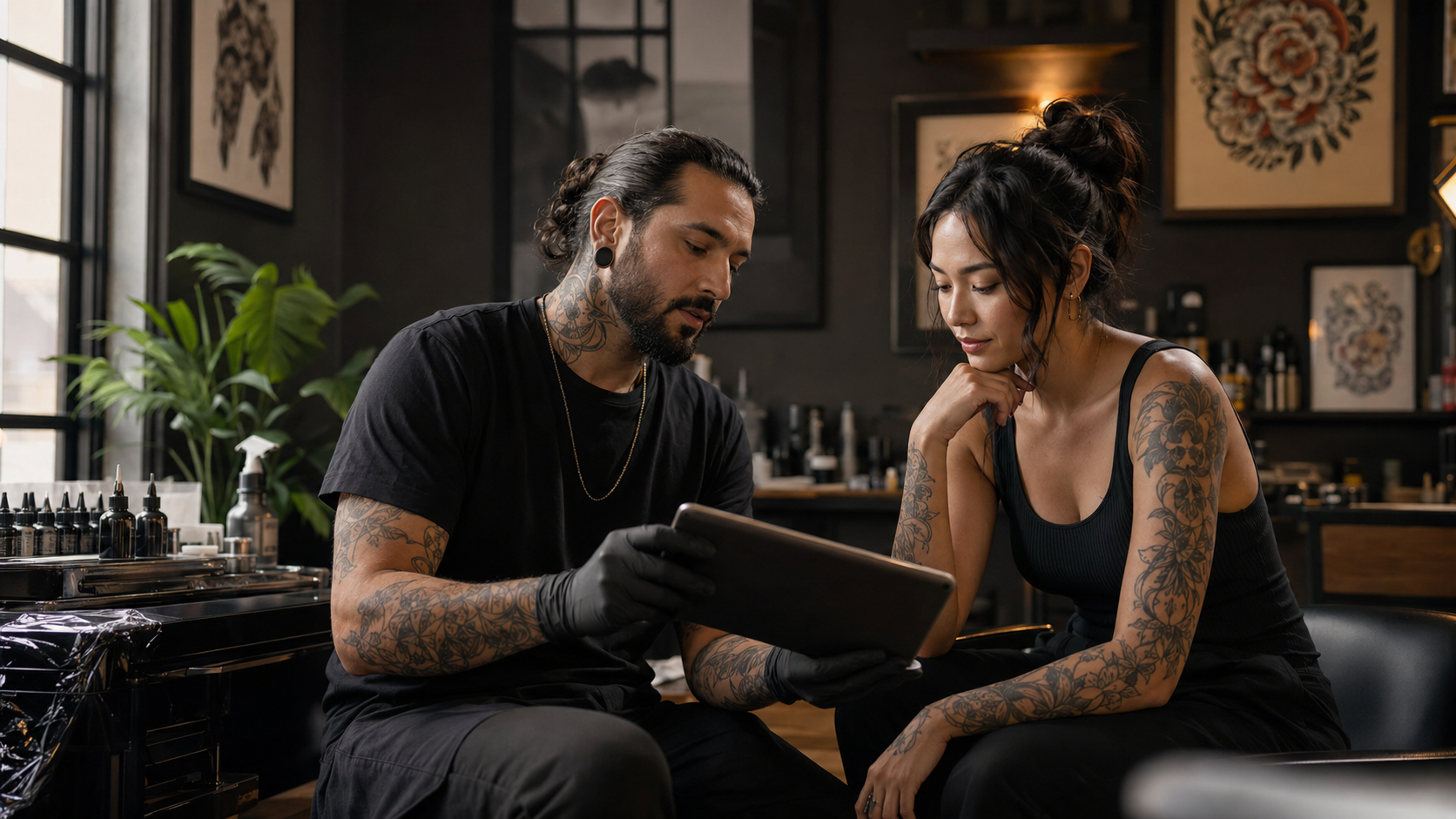
Small flash designs may be booked directly, while custom sleeves, portraits, cover-ups, and large compositions usually benefit from a consultation. Bring concise references and be honest about budget and scheduling. Listen when the artist recommends changing the size, placement, contrast, or amount of detail. Good technical advice protects readability and longevity.
A consultation is also your opportunity to ask about the design process, estimated sessions, deposit, preparation, aftercare, and revision limits. You should leave with a reasonable understanding of the next step, even if the final drawing is not shown until the appointment day. Policies vary, so rely on the chosen artist's written instructions.
Common Mistakes to Avoid
- Choosing solely by distance, price, or follower count.
- Booking before reviewing style-specific and healed work.
- Sending vague messages with no size, placement, or location.
- Copying another artist's custom design.
- Ignoring deposit, cancellation, or aftercare policies.
- Rushing because an appointment happens to be available.
Another common mistake is trying to combine too many references into one tattoo. A focused concept gives the artist more room to create a clear composition. If you have several important symbols, ask whether they should become a larger piece or a coordinated series rather than one crowded design.
Make a Confident Final Choice
Create a shortlist of two or three artists whose portfolios, location, policies, and communication fit the project. Compare the evidence directly. The best choice is usually the person whose existing work makes you confident they can solve your specific design—not simply the person with the earliest opening.
How to Choose the Right Tattoo Artist for Your Style is ultimately about informed decision-making. Take time to research, verify current information, ask useful questions, and respect professional boundaries. A thoughtful search increases the chance of receiving a tattoo that is safe, visually strong, personally meaningful, and designed to age well.